Laboratory of Mathematical Modeling of Physiological Processes
Team
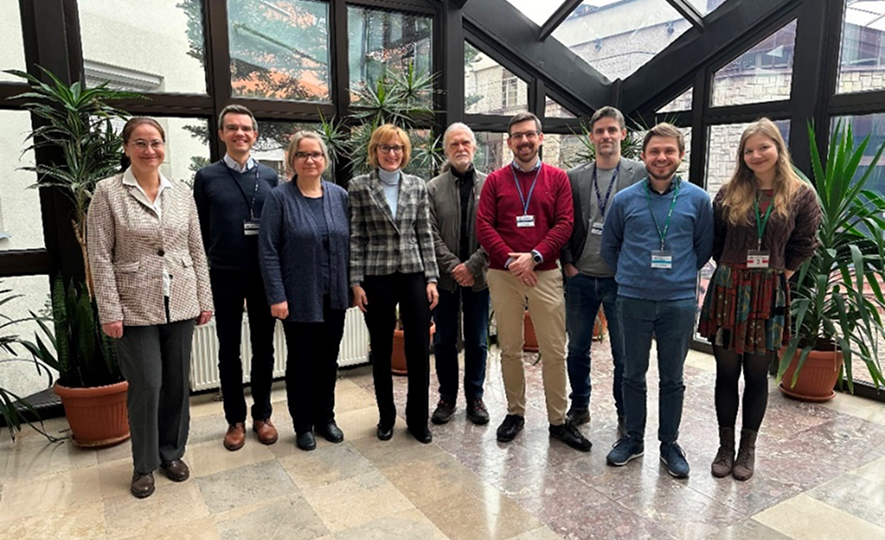
dr hab. Joanna Stachowska-Piętka,
prof. IBIB PAN
– kierownik Pracowni, ORCID
prof. dr hab. inż. Leon Bobrowski, ORCID
prof. dr hab. inż. Jacek Waniewski, ORCID
dr hab. Małgorzata Dębowska, prof. IBIB PAN, ORCID
dr hab. Jan Poleszczuk, prof. IBIB PAN ORCID
dr hab. Elżbieta Olejarczyk, ORCID
dr inż. Mauro Pietribiasi, ORCID
dr inż. Leszek Pstraś, ORCID
mgr Urszula Białończyk (doktorantka), ORCID
mgr Kamil Wołos (doktorant), ORCID
Our research
Our mission is to develop innovative mathematical, computational, and informatics tools for the analysis of clinical and biomedical data, that will ultimately improve the diagnosis and optimization of various internal diseases treatments. Our research is focused on two interconnected fronts:
- analysis of data through advanced statistical methods, and
- mathematical modeling of (patho-) physiological processes and simulation of various treatment scenarios.
The interdisciplinary backgrounds of our team allow us to tackle a variety of challenges together with specialists from different fields. Our work covers topics from the study of dialysis treatments in patients with chronic kidney disease, to the optimization of cancer therapies, from modeling of the cardiovascular system to the analysis of electroencephalographic signals.
Research activities
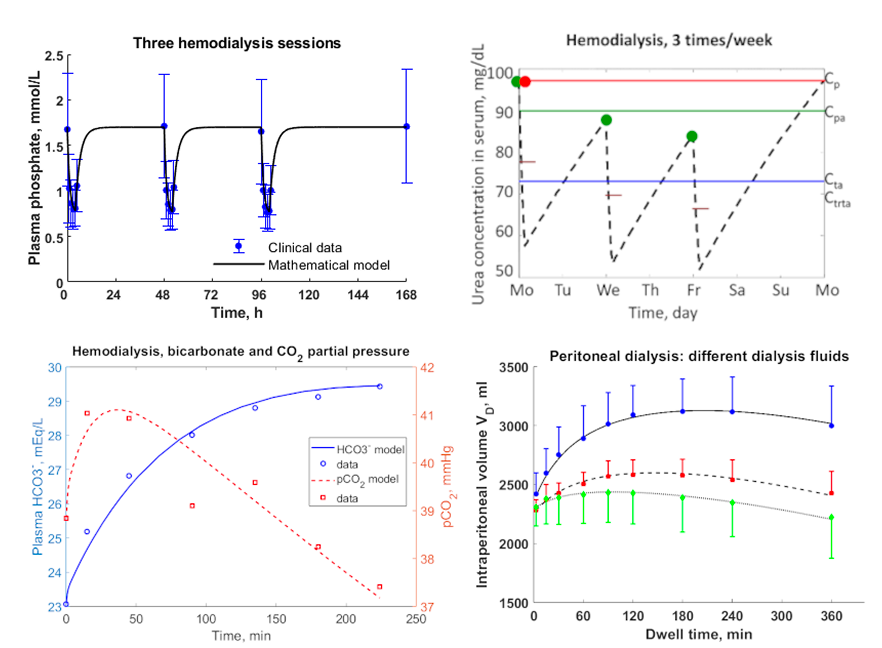
Modeling of dialysis therapies
- Application of mathematical models to assess, predict, and compare the effectiveness of various types of hemodialysis and peritoneal dialysis, focusing on the description of water and solute transport processes and the physiological interpretation of patient-specific parameters estimated from the models1-4.
- Investigation of water and solute shifts between body compartments caused by the rapid removal of water and exchange of solutes during dialysis based on the patient-specific parameters estimated from mathematical models5-8.
- Development of new models to extend the analysis of hemodialysis and peritoneal dialysis transport by including the transport of additional solutes (e.g. phosphates, calcium, bicarbonate), the impact of additional processes (e.g. vasodilation, hydrolysis) or regulatory mechanisms (e.g. acid-base homeostasis)9-12.
Modeling of the cardiovascular system
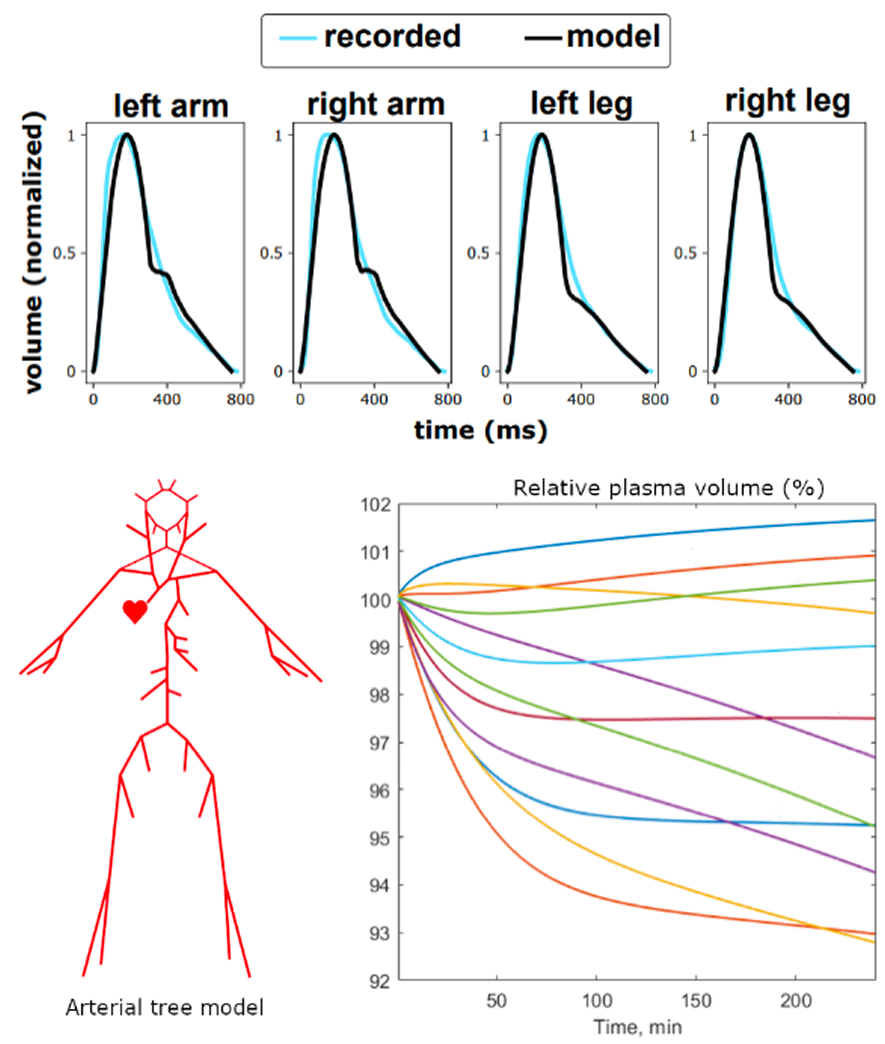
- Analysis of blood volume and blood pressure changes during hemodialysis using models accounting for water and solute transport and autonomic cardiovascular regulatory mechanisms13,14.
- Model-based analysis of baroreflex regulation (e.g. modeling of the Valsalva maneuver)15,16.
- Investigation of pulse wave propagation in hemodialysis patients using mathematical models of the arterial tree with an arteriovenous fistula, describing one-dimensional blood flow in compliant arterial vessels17,18.
- Optimization of vasopressor dosing in patients with severe brain injury using pulse wave propagation modeling.
Modeling of transport in a porous medium
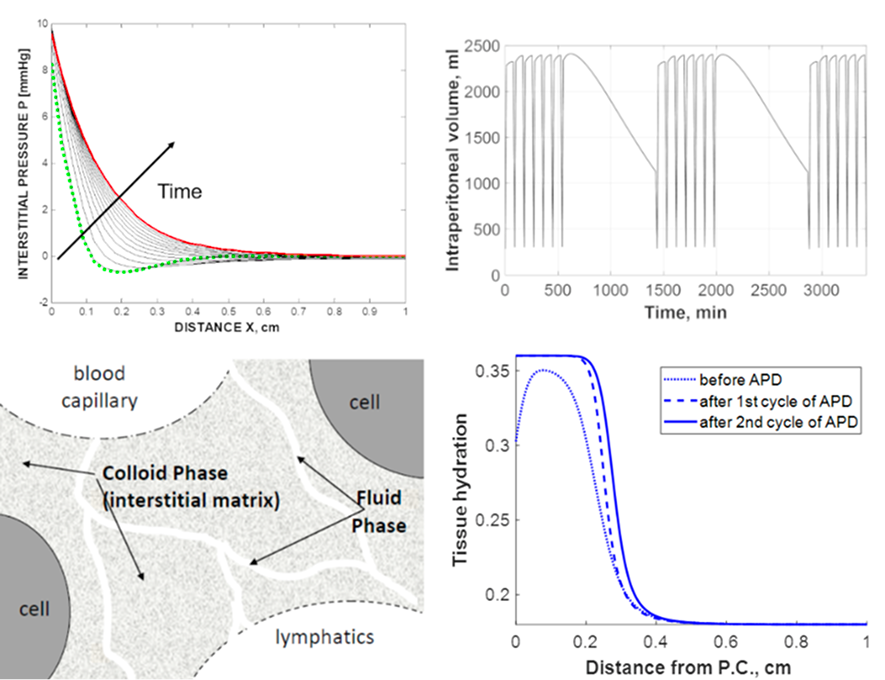
- Mathematical modeling of water and solute transport through the tissue, taking into account local tissue physiology and its spatial variability (e.g. hydration, elasticity, transport characteristics, two-phase structure of the interstitium, exchange of water and solutes between tissue and local blood and lymphatic capillaries)19,20.
- Analysis of fluid and solute penetration into the tissue, their transport through the tissue and estimation of local transport parameters based on clinical and experimental data using mathematical models20,21.
- Theoretical investigation of the fluid and solute transport through the porous medium (e.g. impact of medium deformation caused by the transport)22.
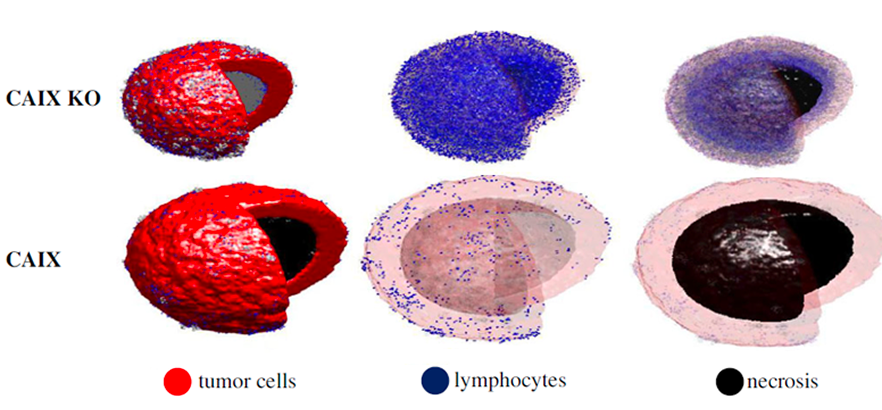
Modeling of cancer growth and its response to therapy
- Development of mathematical models to predict systemic response of metastatic tumors to focal radiotherapy – either alone or in combination with immunotherapy23.
- Modeling of interplay between tumor and immune system24.
- Analysis of clinical data from patients with cancer to improve treatment outcome and patient survival25.
- Image analysis for discovery and development of new biomarkers for predicting response to therapy26.
- Microsimulations for optimization of cancer screening strategies27.
Statistical analysis, data mining, and signal processing
- Application of bioinformatics methods and statistical analysis of multidimensional datasets to determine factors associated with dialysis treatment outcomes and clinical complications (e.g. medial arterial calcification, changes in hemoconcentration markers)28-33.
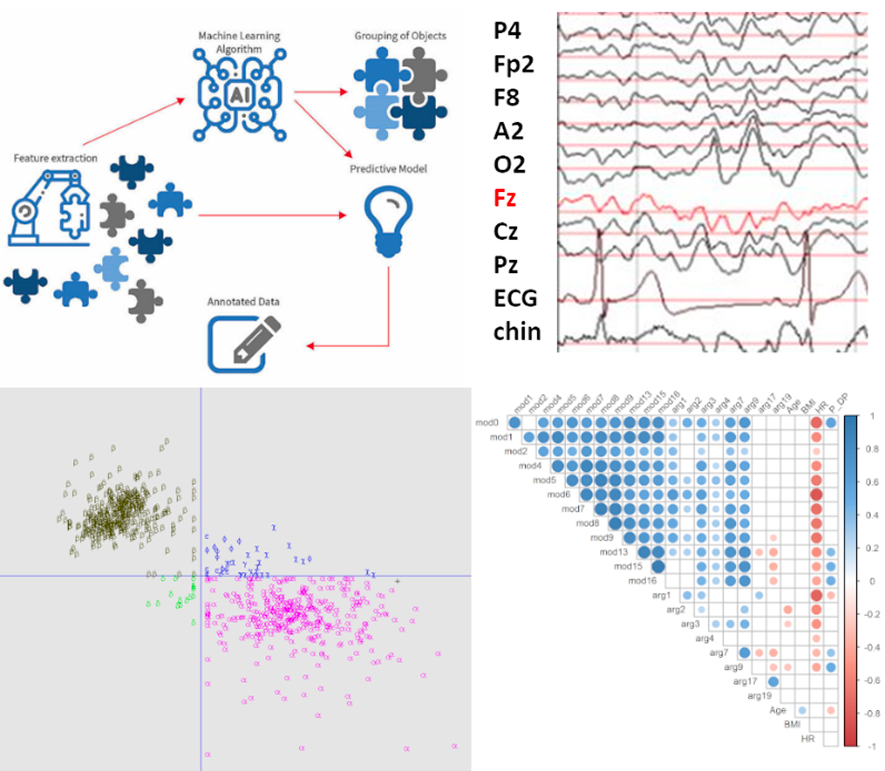
- Development of novel algorithms aimed at discovering meaningful patterns in multidimensional data sets, based on the minimization of the convex and piecewise linear (CPL) criterion functions34.
- Development and application of advanced methods of electrophysiological signal (EEG, ECG) processing and analysis to study the mechanisms of brain and/or heart activity in different physiological conditions (sleep, anesthesia) and to support clinical diagnosis of various neurological, psychiatric and cardiovascular diseases (depression, epilepsy, stroke) and to assess the effectiveness of patient therapy35-38.
- Development of algorithms for the analysis of relative blood volume signals in hemodialysis patients to estimate absolute blood volume39.
- •Analysis of clinical data from patients with cancer diagnosis to improve treatment outcomes and patient survival40.
Research collaborations
- Medical University of Lublin (Poland),
- Medical University of Warsaw (Poland),
- Military Institute of Medicine in Warsaw (Poland),
- Medical University of Bialystok (Poland),
- AGH University of Science and Technology, Krakow (Poland),
- Karolinska Institutet (Sweden),
- University of Gothenburg (Sweden),
- Keele University (UK),
- Vall d’Hebron University Hospital, Barcelona (Spain),
- University of Valladolid (Spain),
- Germans Trias i Pujol Research Institute and Hospital (Spain),
- National Academy of Sciences of Ukraine,
- Medical University of Vienna (Austria),
- National Institute of Health (USA),
- XXI Century National Medical Center, Mexico City (Mexico),
- University of Valle, Cali (Colombia),
- Campus Bio-Medico University of Rome (Italy),
- National Research Council, Rome (Italy),
- Gabriele D’Annunzio University, Chieti (Italy),
- Vilnius University (Lithuania),
- Republican Vilnius Psychiatric Hospital (Lithuania).
External funding
- Project 2021/43/D/NZ5/01887 "Optimization of haemodialysis treatment for patient's haemodynamic stability – in silico simulation study" funded by the National Science Centre (Poland), 2022-2025
- Project 2018/31/D/ST7/03472 "Optimization of vasopressor dose in severe traumatic brain injuries using pulse-wave propagation modeling" funded by the National Science Centre (Poland), 2019-2022.
- Project 2017/27/B/ST7/03029 "Optimizing dialysate bicarbonate concentration during hemodialysis by mathematical modeling" funded by the National Science Centre (Poland), 2017-2024.
- Project 2014/15/N/ST7/05316 “Mathematical Modeling of fluid and electrolytes transport in patients on hemodialysis” funded by the National Science Centre (Poland), 2015-2017.
- Project 2013/11/B/ST7/01704 "Mathematical modeling of pulse-wave propagation for cardiovascular diagnostics in patients on hemodialysis” in collaboration with Medical University of Lublin, funded by the National Science Centre (Poland), 2014-2017.
- Long-term Swedish - Polish research project to support the costs of collaboration between IBIB PAN and Karolinska Institutet, Department of Clinical Science, Intervention and Technology, Baxter Novum (Project Novum-IBBE, running).
Selected publications
- Stachowska-Pietka J, Poleszczuk J, Teixido-Planas J, Bonet-Sol J, Troya-Saborido MI, Waniewski J. Fluid Tonicity Affects Peritoneal Characteristics Derived By 3-Pore Model. Peritoneal Dialysis International. 2019;39(3):243-251. doi:10.3747/PDI.2017.00267
- Stachowska-Pietka J, Waniewski J, Olszowska A, et al. Can one long peritoneal dwell with icodextrin replace two short dwells with glucose? Front Physiol. 2024;15. doi:10.3389/FPHYS.2024.1339762
- Pstras L, Ronco C, Tattersall J. Basic physics of hemodiafiltration. Semin Dial. 2022;35(5):390-404. doi:10.1111/SDI.13111
- Mendes JJ, Pietribiasi M. Is continuous renal replacement therapy an option for hyperkalemic cardiocirculatory arrest? Resuscitation. 2023;184. doi:10.1016/J.RESUSCITATION.2023.109714
- Pstras L, Waniewski J, Lindholm B. Transcapillary transport of water, small solutes and proteins during hemodialysis. Sci Rep. 2020;10(1). doi:10.1038/S41598-020-75687-1
- Pstras L, Waniewski J, Lindholm B. Vascular refilling coefficient is not a good marker of whole-body capillary hydraulic conductivity in hemodialysis patients: insights from a simulation study. Sci Rep. 2022;12(1). doi:10.1038/S41598-022-16826-8
- Pietribiasi M, Mitsides N, Waniewski J, Mitra S. Plasma volume response patterns and a physiologic model of ultrafiltration in hemodialysis. Artif Organs. 2024;49(2). doi:10.1111/AOR.14876
- Pietribiasi M, Waniewski J, Wójcik-Załuska A, Załuska W, Lindholm B. Model of fluid and solute shifts during hemodialysis with active transport of sodium and potassium. PLoS One. 2018;13(12). doi:10.1371/JOURNAL.PONE.0209553
- Stachowska-Pietka J, Waniewski J, Olszowska A, Garcia-Lopez E, Wankowicz Z, Lindholm B. Modelling of icodextrin hydrolysis and kinetics during peritoneal dialysis. Sci Rep. 2023;13(1). doi:10.1038/S41598-023-33480-W
- Pietribiasi M, Waniewski J, Leypoldt JK. Mathematical modelling of bicarbonate supplementation and acid-base chemistry in kidney failure patients on hemodialysis. PLoS One. 2023;18(2 February). doi:10.1371/JOURNAL.PONE.0282104
- Pietribiasi M, Leypoldt JK, Wieliczko M, et al. Profiled delivery of bicarbonate during weekly cycle of hemodialysis. Biocybern Biomed Eng. 2024;44(4):836-843. doi: 10.1016/j.bbe.2024.10.002
- Waniewski J, Debowska M, Wojcik-Zaluska A, Zaluska W, Lindholm B. Mathematical models for phosphate kinetics in patients on maintenance hemodialysis. Sci Rep. 2025;15(1):1-12. doi:10.1038/S41598-025-93443-1
- Pstras L, Waniewski J, Lindholm B. Monitoring relative blood volume changes during hemodialysis: Impact of the priming procedure. Artif Organs. 2021;45(10):1189-1194. doi:10.1111/AOR.13972
- Pstras L, Waniewski J, Wojcik-Zaluska A, Zaluska W. Relative blood volume changes during haemodialysis estimated from haemoconcentration markers. Scientific Reports 2020 10:1. 2020;10(1):1-9. doi:10.1038/s41598-020-71830-0
- Pstras L, Thomaseth K, Waniewski J, Balzani I, Bellavere F. Modeling Pathological Hemodynamic Responses to the Valsalva Maneuver. J Biomech Eng. 2017;139(6). doi:10.1115/1.4036258
- Pstras L, Thomaseth K, Waniewski J, Balzani I, Bellavere F. Mathematical modelling of cardiovascular response to the Valsalva manoeuvre. Mathematical Medicine and Biology. 2017;34(2):261-292. doi:10.1093/IMAMMB/DQW008
- Wołos K, Pstras L, Debowska M, Dabrowski W, Siwicka-Gieroba D, Poleszczuk J. Non-invasive assessment of stroke volume and cardiovascular parameters based on peripheral pressure waveform. PLoS Comput Biol. 2024;20(4 April). doi:10.1371/JOURNAL.PCBI.1012013
- Poleszczuk J, Debowska M, Dabrowski W, Wojcik-Zaluska A, Zaluska W, Waniewski J. Patient-specific pulse wave propagation model identifies cardiovascular risk characteristics in hemodialysis patients. PLoS Comput Biol. 2018;14(9). doi:10.1371/JOURNAL.PCBI.1006417
- Stachowska-Pietka J, Waniewski J, Flessner MF, Lindholm B. Concomitant bidirectional transport during peritoneal dialysis can be explained by a structured interstitium. Am J Physiol Heart Circ Physiol. 2016;310(11):H1501-H1511. doi:10.1152/AJPHEART.00925.2014
- Stachowska-Pietka J, Naumnik B, Suchowierska E, Gomez R, Waniewski J, Lindholm B. Water removal during automated peritoneal dialysis assessed by remote patient monitoring and modelling of peritoneal tissue hydration. Sci Rep. 2021;11(1):1-10. doi:10.1038/S41598-021-95001-X
- Stachowska-Pietka J, Poleszczuk J, Flessner MF, Lindholm B, Waniewski J. Alterations of peritoneal transport characteristics in dialysis patients with ultrafiltration failure: tissue and capillary components. Nephrology Dialysis Transplantation. 2018;34(5):864. doi:10.1093/NDT/GFY313
- Cherniha R, Davydovych V, Stachowska-Pietka J, Waniewski J. A Mathematical Model for Transport in Poroelastic Materials with Variable Volume: Derivation, Lie Symmetry Analysis and Examples—Part 2. Symmetry (Basel). 2022;14(1). doi:10.3390/sym14010109
- Poleszczuk JT, Luddy KA, Prokopiou S, et al. Abscopal benefits of localized radiotherapy depend on activated T-cell trafficking and distribution between metastatic lesions. Cancer Res. 2016;76(5):1009-1018. doi:10.1158/0008-5472.CAN-15-1423
- Grajek J, Poleszczuk J. Carbonic Anhydrase IX Suppression Shifts Partial Response to Checkpoint Inhibitors into Complete Tumor Eradication: Model-Based Investigation. Int J Mol Sci. 2023;24(12). doi:10.3390/IJMS241210068
- Spałek MJ, Teterycz P, Borkowska A, Poleszczuk J, Rutkowski P. Stereotactic radiotherapy for soft tissue and bone sarcomas: real-world evidence. Ther Adv Med Oncol. 2022;14. doi:10.1177/17588359211070646
- Jardim-Perassi B V., Mu W, Huang S, et al. Deep-learning and MR images to target hypoxic habitats with evofosfamide in preclinical models of sarcoma. Theranostics. 2021;11(11):5313-5329. doi:10.7150/THNO.56595
- Deibel A, Deng L, Cheng CY, et al. Evaluating key characteristics of ideal colorectal cancer screening modalities: the microsimulation approach. Gastrointest Endosc. 2021;94(2):379-390.e7. doi:10.1016/j.gie.2021.02.013
- Pstras L, Debowska M, Wojcik-Zaluska A, Zaluska W, Waniewski J. Hemodialysis-induced changes in hematocrit, hemoglobin and total protein: Implications for relative blood volume monitoring. PLoS One. 2019;14(8). doi:10.1371/JOURNAL.PONE.0220764
- Dai L, Debowska M, Lukaszuk T, et al. Phenotypic features of vascular calcification in chronic kidney disease. J Intern Med. 2020;287(4):422-434. doi:10.1111/JOIM.13012,
- Bialonczyk U, Debowska M, Dai L, et al. Detection of medial vascular calcification in chronic kidney disease based on pulse wave analysis in the frequency domain. Biomed Signal Process Control. 2024;94:106250. doi:10.1016/j.bspc.2024.106250
- Debowska M, Dai L, Wojcik-Zaluska A, et al. Association between Biomarkers of Mineral and Bone Metabolism and Removal of Calcium and Phosphate in Hemodialysis. Blood Purif. 2020;49(1-2):71-78. doi:10.1159/000503623
- Pinto J, Debowska M, Gomez R, Waniewski J, Lindholm B. Urine volume as an estimator of residual renal clearance and urinary removal of solutes in patients undergoing peritoneal dialysis. Sci Rep. 2022;12(1). doi:10.1038/S41598-022-23093-0
- Debowska M, Poleszczuk J, Dabrowski W, Wojcik-Zaluska A, Zaluska W, Waniewski J. Impact of hemodialysis on cardiovascular system assessed by pulse wave analysis. PLoS One. 2018;13(11). doi:10.1371/JOURNAL.PONE.0206446
- Bobrowski L, Łukaszuk T, Gaffke L, et al. Separating gene clustering in the rare mucopolysaccharidosis disease. J Appl Genet. 2022;63(2):361-368. doi:10.1007/S13353-022-00691-2/METRICS
- Olejarczyk E, Sobieszek A, Assenza G. Automatic Detection of the EEG Spike–Wave Patterns in Epilepsy: Evaluation of the Effects of Transcranial Current Stimulation Therapy. International Journal of Molecular Sciences 2024, Vol 25, Page 9122. 2024;25(16):9122. doi:10.3390/IJMS25169122
- Olejarczyk E, Gotman J, Frauscher B. Region-specific complexity of the intracranial EEG in the sleeping human brain. Sci Rep. 2022;12(1). doi:10.1038/S41598-021-04213-8
- Olejarczyk E, Valiulis V, Dapsys K, Gerulskis G, Germanavicius A. Effect of repetitive transcranial magnetic stimulation on fronto-posterior and hemispheric asymmetry in depression. Biomed Signal Process Control. 2021;68:102585. doi:10.1016/J.BSPC.2021.102585
- Olejarczyk E, Zuchowicz U, Wozniak-Kwasniewska A, Kaminski M, Szekely D, David O. The Impact of Repetitive Transcranial Magnetic Stimulation on Functional Connectivity in Major Depressive Disorder and Bipolar Disorder Evaluated by Directed Transfer Function and Indices Based on Graph Theory. Int J Neural Syst. 2020;30(4). doi:10.1142/S012906572050015X
- Pstras L, Krenn S, Waniewski J, et al. Estimation of absolute blood volume in hemodialysis patients: A numerical algorithm for assessing blood volume increase after dialysate bolus infusion. Biomed Signal Process Control. 2024;88:105440. doi: 10.1016/j.bspc.2023.105440
- Paszkiewicz-Kozik E, Debowska M, Jakacka N, et al. Rituximab and Chemotherapy for Newly Diagnosed Follicular Lymphoma: Real-World Report of Polish Lymphoma Research Group. Chemotherapy. 2022;67(4):201-210. doi:10.1159/000523921
