About us
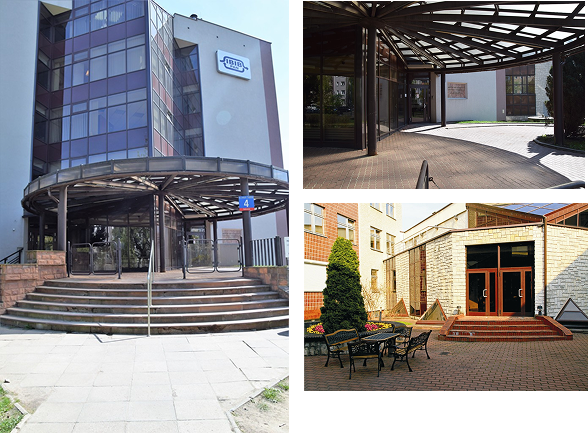
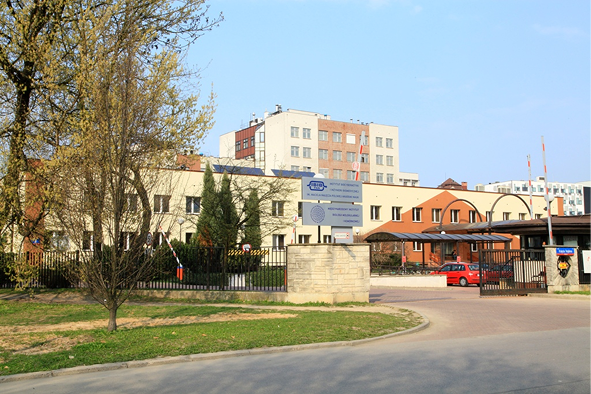
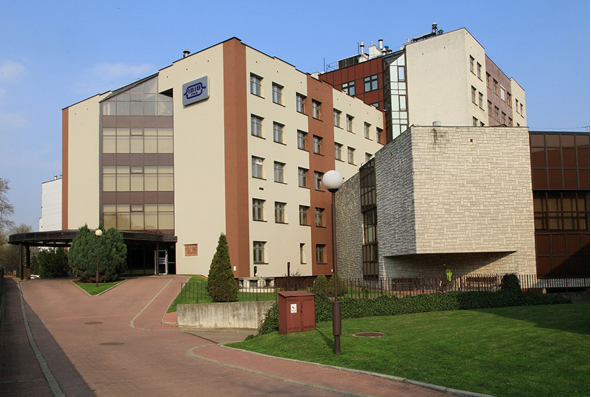
IBBE PAS is a world-class scientific institution. Our Conference Centre is a complex that hosts both scientific and business meetings. During our 20 years of operation, we have been entrusted with the organisation of numerous conferences, training courses and special events, both domestic and international.
We had the pleasure of hosting the incumbent presidents of the Republic of Poland, prime ministers of the Republic of Poland, representatives of the government, science and culture.
We are one of the main centres organising conferences for the Polish Academy of Sciences. We are distinguished by our extensive experience in organising conferences and the unique atmosphere of our facility, with its scientific ambience.
We have six conference rooms that can accommodate between 10 and 300 guests, an exhibition hall that is also equipped to provide catering services, and a well-coordinated technical support team that makes every effort to meet the expectations of conference organisers. We provide top-class sound and audiovisual equipment.
In addition, we offer accommodation in single and double rooms away from busy roads, guaranteeing our guests a peaceful stay.
One of our greatest assets is our excellent location, as we are only 3 km (15 minutes) from the centre of Warsaw and 2 km (5 minutes) from Okęcie Airport.
There is a 24-hour car park on our premises.
Centrum Konferencyjne – rezerwacje:
tel. (22) 668-50-17
konferencje@ibib.waw.pl
Accessibility statement
The Maciej Nałęcz Institute of Biocybernetics and Biomedical Engineering of the Polish Academy of Sciences undertakes to ensure the accessibility of its website in accordance with the provisions of the Act of 4 April 2019 on the digital accessibility of websites and mobile applications of public entities.
The accessibility statement applies to the following websites: www.ibib.waw.pl and www.ibib.com.pl.
1. DIGITAL accessibility
The website is partially compliant with the Act of 4 April 2019 on the digital accessibility of websites and mobile applications of public entities, mainly due to the non-compliance or exclusions listed below. Not all graphic elements on the website are accessible via the keyboard. There are no alternative descriptions for images, no audio descriptions for published materials, and no sign language interpreter available via electronic means of communication. Some PDF documents have been published as scans without a text layer. The content presented in the Polish and English versions is not fully consistent. Some elements of the website do not meet the minimum contrast requirements, which may hinder accessibility for visually impaired people. The declaration was prepared on the basis of a self-assessment carried out by a public entity – last updated on 22 March 2021. If you encounter any problems with the accessibility of the website, please contact us. You can contact us by email at sekretariat@ibib.waw.pl or by calling (22) 592 59 00. The same channels can be used to request access to unavailable information and to submit complaints about lack of accessibility. Everyone has the right to request digital accessibility of a website, mobile application or any element thereof. You can also request that information be made available in alternative formats, for example, reading a document that is not digitally accessible, describing the content of a film without audio description, etc. The request should include the details of the person making the request, an indication of which web page or mobile application is concerned, and a means of contact. If the person making the request indicates a need to receive the information in an alternative format, they should also specify the format of that information. The public entity is obliged to comply with the request immediately and no later than within 7 days.
If this deadline cannot be met, the public entity shall immediately notify the applicant of the new deadline, which may not exceed two months.
If a public body cannot provide access to information in the requested form, it may propose an alternative means of access to the information.
If a public entity refuses to comply with a request to ensure accessibility or alternative access to information, the applicant has the right to lodge a complaint. Once all other options have been exhausted, the complaint may also be sent to the Ombudsman.
2. Architectural accessibility
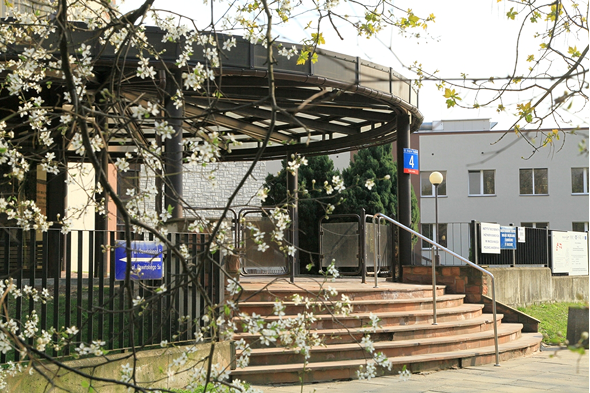
There are four buildings on the Institute's premises, marked A, B, C and E. There are three entrances to the Institute: one entrance to building C from Pawińskiego Street, and two entrances to building A and building E from Księcia Trojdena Street. The main entrance to the Institute is located in building C on Pawińskiego Street and is accessed by stairs. There is no platform, but there is a ramp leading to the entrance from the car park. The main entrance is accessible to people with special needs. From Księcia Trojdena Street, the entrance and driveway lead through the car park. The surface leading to the entrances to the building is made of cobblestones. There are stairs leading to building A, and there is a ramp for people with special needs leading to building E. There are no designated parking spaces for persons with special needs in the car park. All buildings have wide corridors without architectural barriers. There are toilets for persons with special needs on the ground floor of the building.
Building A consists of three storeys: basement, ground floor, and first floor. Communication between storeys is via staircases without landings. The first floor of section A can be accessed by lift in building C, then via a connecting passage from section C.
Building B consists of two storeys: a basement and a ground floor. The basement houses technical facilities that are not accessible to persons with special needs. The ground floor of the building houses a lecture hall, which is accessible without architectural barriers.
Building C consists of six storeys: a basement, ground floor and four upper floors. Communication between floors is via a staircase and two lifts.
Building E consists of two floors: a basement and a ground floor. The ground floor has an entrance with a driveway from the car park, while the basement houses technical rooms and a lecture hall. Access is via a staircase without access for people with special needs. Assistance dogs and guide dogs are permitted in the Institute and all its rooms. The Institute provides alternative access in the form of support from another person.
The architectural barriers and non-compliant elements of the website listed in the declaration result from the fact that the building and the websites were made available for use before the Digital Accessibility Act came into force. The Institute makes every effort to eliminate these obstacles to the extent of its financial resources.
