Biomedical Optics Laboratory
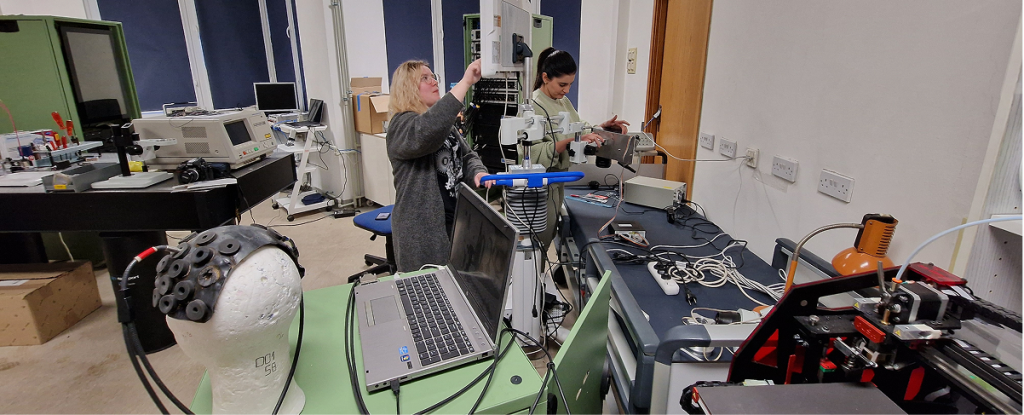
Team
Stanisław Wojtkiewicz. PhD. Eng. – Head of the Lab,
ORCID: 0000-0002-5556-4730
Prof. Adam Liebert, PhD DSc Eng. ORCID: 0000-0003-1643-7568
Prof. Roman Maniewski, PhD, DSc. Eng. ORCID: 0000-0002-7600-8493
Assoc. Prof. Piotr Sawosz, PhD. DSc. Eng., ORCID 0000-0002-0697-3036
Sara Fathollah, PhD ORCID: 0000-0002-5058-3510
Anna Gerega, PhD. ORCID: 0000-0002-9809-6041
Michał Kacprzak, PhD. Eng. ORCID: 0000-0002-3149-837X
Aleh Sudakou, PhD. ORCID: 0000-0003-0508-0495
Karolina Bejm, MSc (PhD student)
Neda Mogharari, MSc (PhD student)
Former lab members:
Phd. Saeed Samaei, Phd. ORCID: 0000-0001-9399-1840
Daniel Milej, Phd. ORCID: 0000-0003-3173-0834
Assoc. Prof. Beata Toczyłowska, Phd. DSc. Eng. ORCID: 0000-0002-5031-6228
Norbert Żołek, Phd.
Michał Kania, Phd. ORCID: 0000-0002-8857-6754
Małgorzata Fereniec, Phd.
Research subjects:
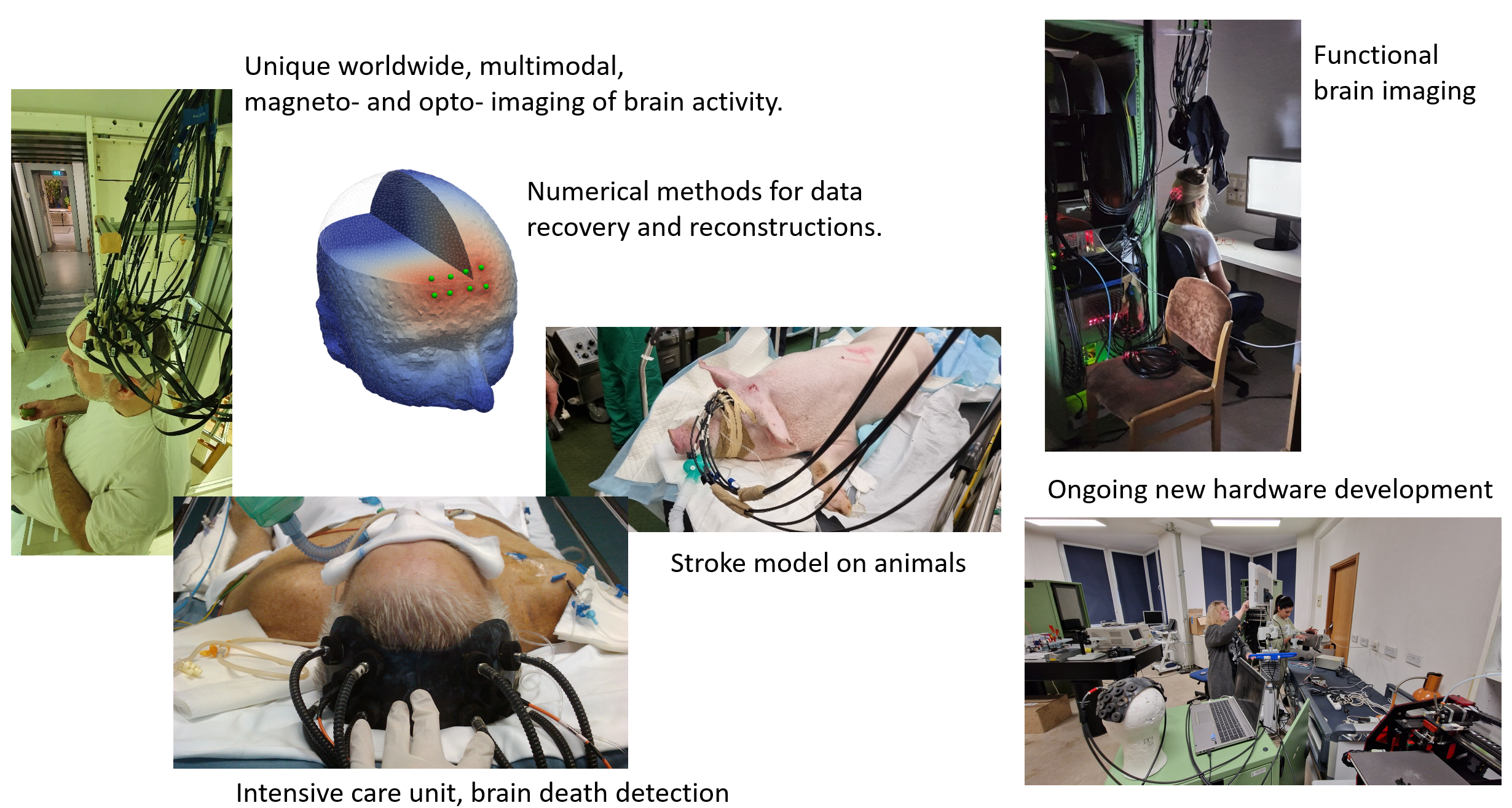
Our activities are interdisciplinary and cover the full path from the idea and development of a theoretical physical description through its hardware and algorithmic implementation and culminate in testing on an animal model and on healthy volunteers and patients in a clinical setting.
Selected examples of applications of ongoing research activities:
- Non-invasive, optical devices based on near-infrared spectroscopy technique for the diagnosis of strokes, intracranial bleeding, intraoperative monitoring of cerebral oxygenation (e.g. carotid artery clog removal), detection of brain death, etc..
- Non-invasive imaging of cerebral cortex activity during movement or viewing of visual stimuli, also under oxygen deprivation or high g-force overload conditions.
- Non-invasive monitoring of muscle oxygenation during exercise.
- Non-contact, non-invasive monitoring of wound healing using the correlative speckle field imaging technique.
- Non-invasive monitoring of cerebral flow by diffuse correlation spectroscopy technique.
- Optical measurement of systolic and diastolic blood pressure.
- Tools for modelling light propagation in tissues that, when applied to a measurement method, allow for recovery of information on the oxygenation or blood supply of the tissue, e.g. “Parallel, multi-purpose Monte Carlo code for simulation of light propagation in segmented tissues” (https://github.com/swojtkiewicz/mc_cuda_ompi) or “Two-layered blood-lipid phantom and method to determine absorption and oxygenation employing changes in moments of DTOFs” (https://github.com/asudakou/Analyzing_TD-NIRS).
Research field description:
The Biomedical Optics Laboratory carries out research work in the field of medical diagnostic techniques based on phenomena related to the interaction of near-infrared light with tissues. In particular, these include measurement methods of haemodynamic parameters of tissues based on near-infrared spectroscopy and dynamic light scattering on red blood cells.
Selected measurement techniques and methods used in the laboratory:
- Near-infrared spectroscopy NIRS (wikipedia.org)
- Time-resolved near-infrared spectroscopy TR-NIRS (wikipedia.org)
- Diffuse correlation spectroscopy (wikipedia.org)
- Laser speckle contrast imaging (wikipedia.org)
Keywords:
NIRS, biomedical optics, near-infrared spectroscopy, measurements of mean time of flight of photons, diffuse optical tomography, diffuse correlation spectroscopy, dynamic imaging of speckle fields
Publications:
To see up to date publications from our lab members, visit our Google Scholar profile Google Scholar.
