



Project Objective
The project addresses an important issue concerning the development of drug delivery systems for the local treatment of bone and bone marrow infections. Osteomyelitis (OM) is an inflammatory condition of bone tissue and bone marrow, and it is one of the most difficult infectious diseases to treat. Bone infections that are not properly treated can lead to serious complications, including:
- bone necrosis,
- arthritis,
- impaired bone growth,
- and even death.
The most commonly isolated pathogen (over 75% of OM cases) is Staphylococcus aureus. Other strains responsible for OM include enterococci, streptococci, and Pseudomonas aeruginosa.
Osteomyelitis can develop in anyone, but the risk is higher if the patient:

is under 13 years of age;

has previously had osteomyelitis;

has diabetes, especially if they have a foot ulcer;

has fractures or wounds;

has undergone surgery;

has a weakened immune system (for example, due to chemotherapy or HIV).
Treatment depends on the stage of the disease and includes:
antibiotic therapy: several weeks of intravenous administration of antibiotics such as vancomycin and ciprofloxacin;
surgical removal of infected tissues;
use of a local drug delivery system;
in extreme cases, limb amputation.
The aim of the project is to obtain a carrier for two antibiotics—vancomycin and ciprofloxacin—for local drug delivery in the treatment of bone and bone marrow infections.
Obecnie głównym problemem w leczeniu infekcji jest oporność bakterii na środki przeciwdrobnoustrojowe. Spowodowane jest to głównie niewłaściwym, zbyt krótkim lub nadmiernym stosowaniem antybiotyków. Niestety liczba szczepów bakterii wykazujących oporność na środki przeciwdrobnoustrojowe i zakres oporności wciąż wzrasta. Naukowcy szacują, że do 2050 r. antybiotykooporność może przyczynić się do śmierci nawet 10 mln ludzi.
Therefore, new treatment strategies are urgently needed, such as the approach proposed in this project, which focuses on the local delivery of antibacterial drugs to infected sites. The aim of the project is to develop a carrier for two antibiotics—vancomycin and ciprofloxacin—for local drug delivery in the treatment of bone and bone marrow infections.
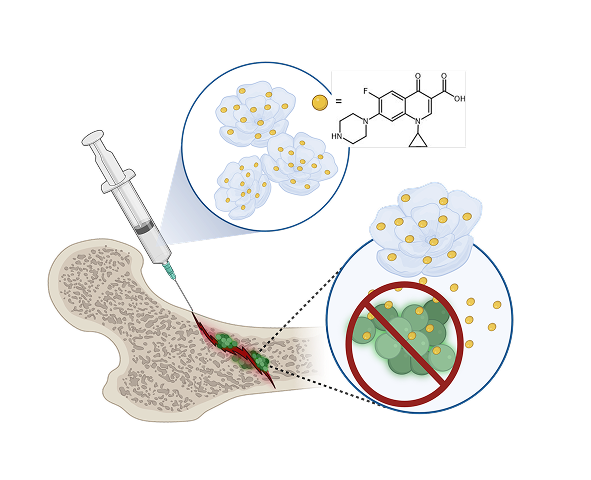
In this project, we propose the synthesis of hybrid nanoflowers from solutions of calcium, magnesium, or strontium salts, combined with bovine serum albumin (BSA). The resulting nanoflowers will be used to immobilize two antibiotics used in the treatment of osteomyelitis, namely vancomycin and ciprofloxacin.
The drug-loaded nanoflowers will be suspended in a hydrogel matrix to create an injectable gel that gradually releases antibiotics at the site of infection. An optimal method for producing the individual components of the drug delivery system will be developed. The drug release profile from the carriers, as well as the stability, degradation time, and antibacterial properties of the developed systems, will be thoroughly investigated.
Nanoflowers
Hybrid nanoflowers are micrometer-sized structures that exhibit a structural resemblance to flowers (SEM images). The “nano-” prefix comes from the numerous nanometer-sized petals that make up the nanoflower structure. The history of hybrid nanoflowers began in 2012, when they were discovered by Ge and co-workers as a result of the accidental addition of a CuSO4 solution to phosphate-buffered saline (PBS) containing bovine serum albumin (BSA). Regardless of the components used in synthesis, the mechanism of hNF formation is very similar and consists of four stages: nucleation, coordination, precipitation, and self-assembly.


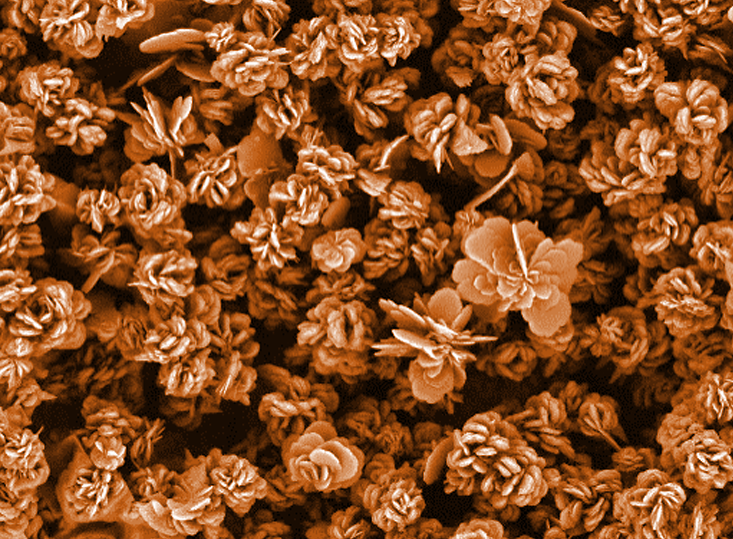
In the first stage, metal ions attach via electrostatic interactions to negatively charged phosphate residues (PO43- ), forming primary crystals. Then, as a result of coordination bonds formed between the metal ions and nitrogen atoms from amino groups, protein immobilization occurs. This leads to the formation of primary nanopetals, which begin to aggregate, initiating the self-assembly process.The petals continue to grow, forming a multilayered structure that resembles flowers in shape. The growth of hNFs is completed when the hierarchical structure becomes saturated
So far, nanoflowers have been synthesized using copper (the vast majority), other transition metals, and alkaline earth metals such as magnesium and calcium. Considering the potential biomedical applications of hybrid nanoflowers, the use of non-toxic metal ions should be taken into account.
Copper is a trace element with a recommended daily intake of approximately 1–10 mg. Although copper ions are essential for many biological processes, an excess of copper exhibits cellular toxicity. Ingestion of more than 1 g of copper sulfate causes symptoms of poisoning and may be fatal.
For comparison, 1 g per day is the recommended intake of calcium, which in certain cases may be more than twice as high. Calcium is an essential element for the formation of bones and teeth. Calcium homeostasis in plasma plays a crucial role in regulating hormone secretion, vascular function, and other processes such as cell growth and migration, as well as neuronal stimulation. Therefore, calcium was selected as a non-toxic ion for the formation of hybrid nanoflowers.
The use of drug delivery systems aims to reduce the frequency of drug administration while maintaining an appropriate concentration of the active substance in tissues over a specified period of time. In this way, they improve therapeutic effectiveness and reduce adverse side effects of drugs.
The main challenge in developing drug delivery systems is to ensure adequate protection during transport and the release of active substances at the right place and time in the body, in a safe and reproducible manner.
The use of carriers for drug delivery provides numerous benefits. It improves the solubility, pharmacokinetics, and biodistribution of drugs, enables controlled release and targeted delivery, and thus reduces their toxicity.
Moreover, the physicochemical properties of carriers can be modified by changing their chemical composition, size, and shape. The use of carriers in drug delivery aims to achieve more effective pharmacological treatment with minimal side effects.
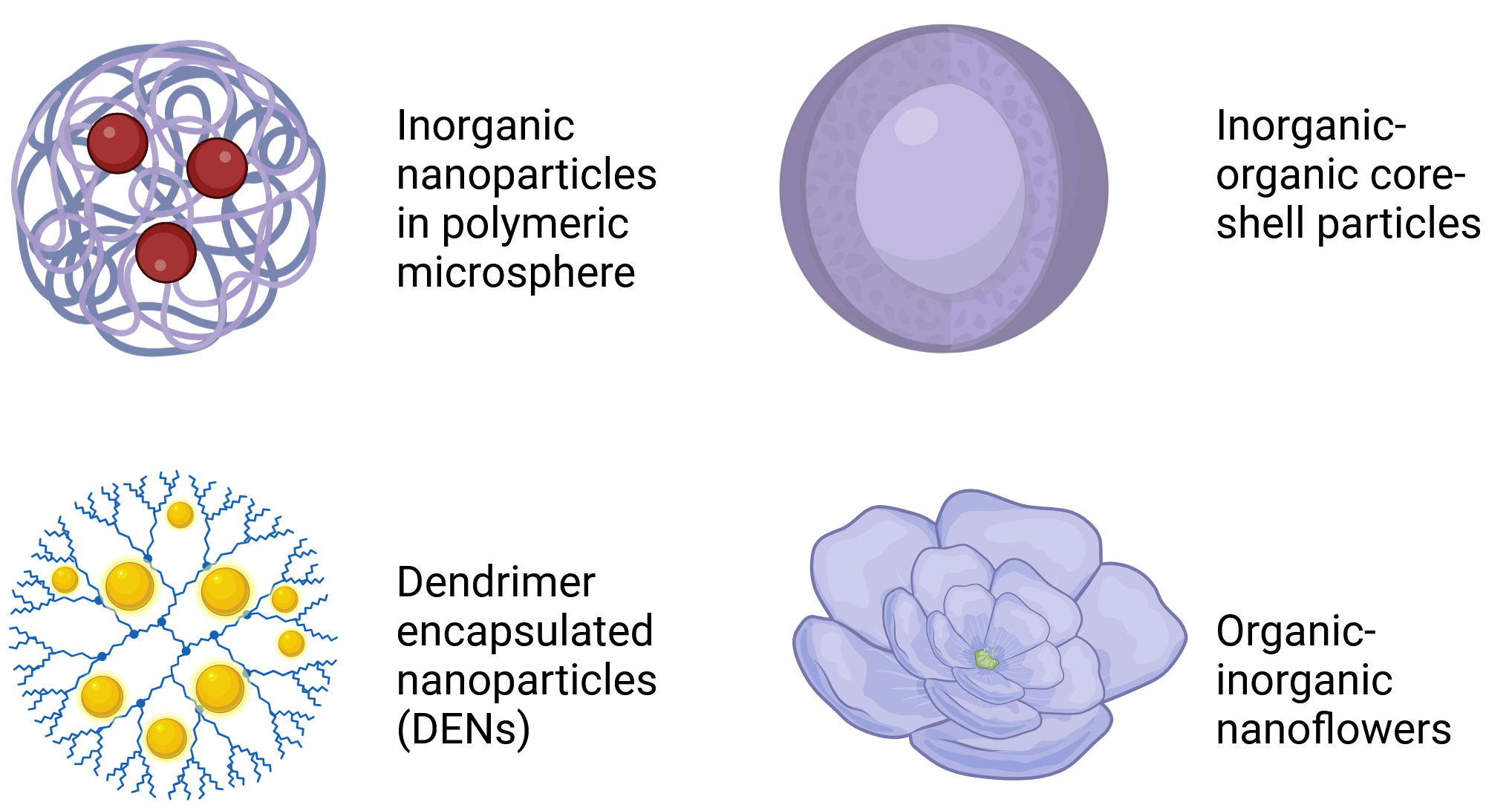
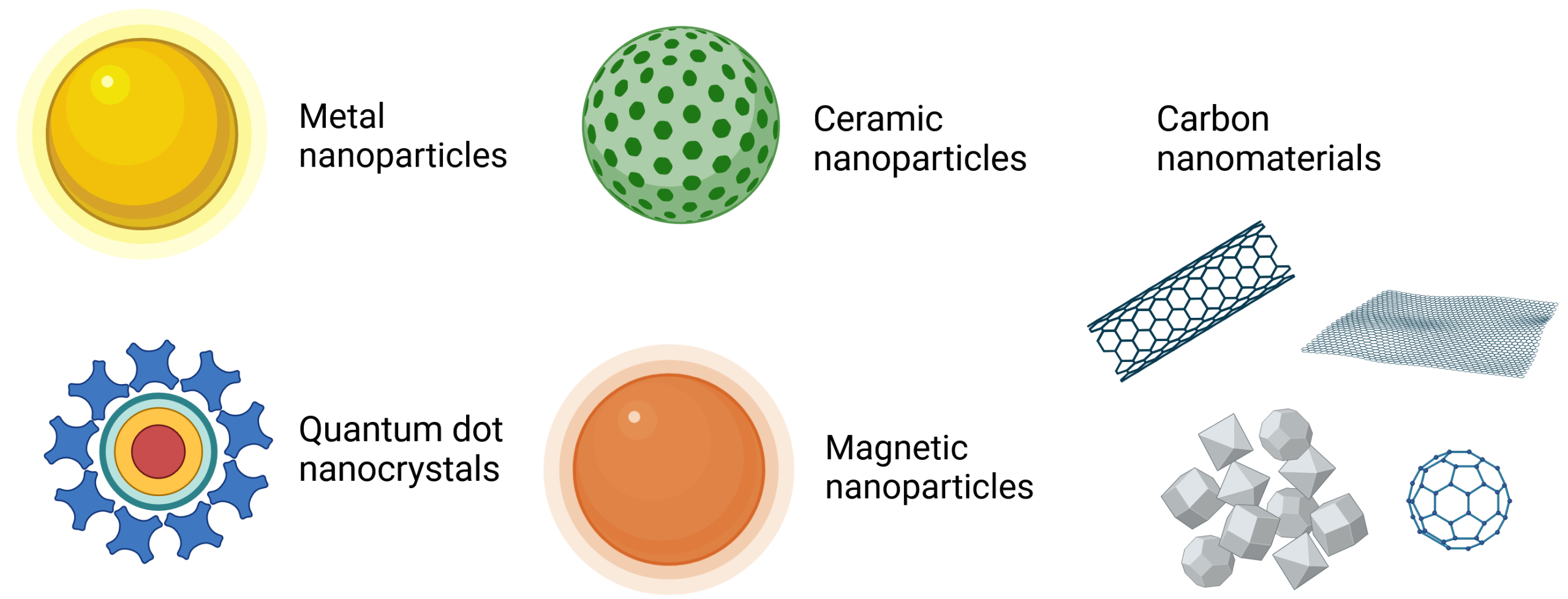
Based on the type of material from which drug delivery systems can be synthesized, they can be divided into three categories:
Z uwagi na fakt, że kości to układy organiczno (oseina)- nieorganiczne (hydroksyapatyt), nasza uwaga badawcza skupiła się wokół hybrydowych nośników leków. W projekcie planowane jest otrzymanie różnych struktur tzw. nanokwiatów hybrydowych, wykorzystując biomolekuły, takie jak albuminy oraz sole wapnia, strontu i magnezu i wykorzystanie ich jako nośników dla wankomycyny i ciprofloksacyny.
Inorganic
Organic
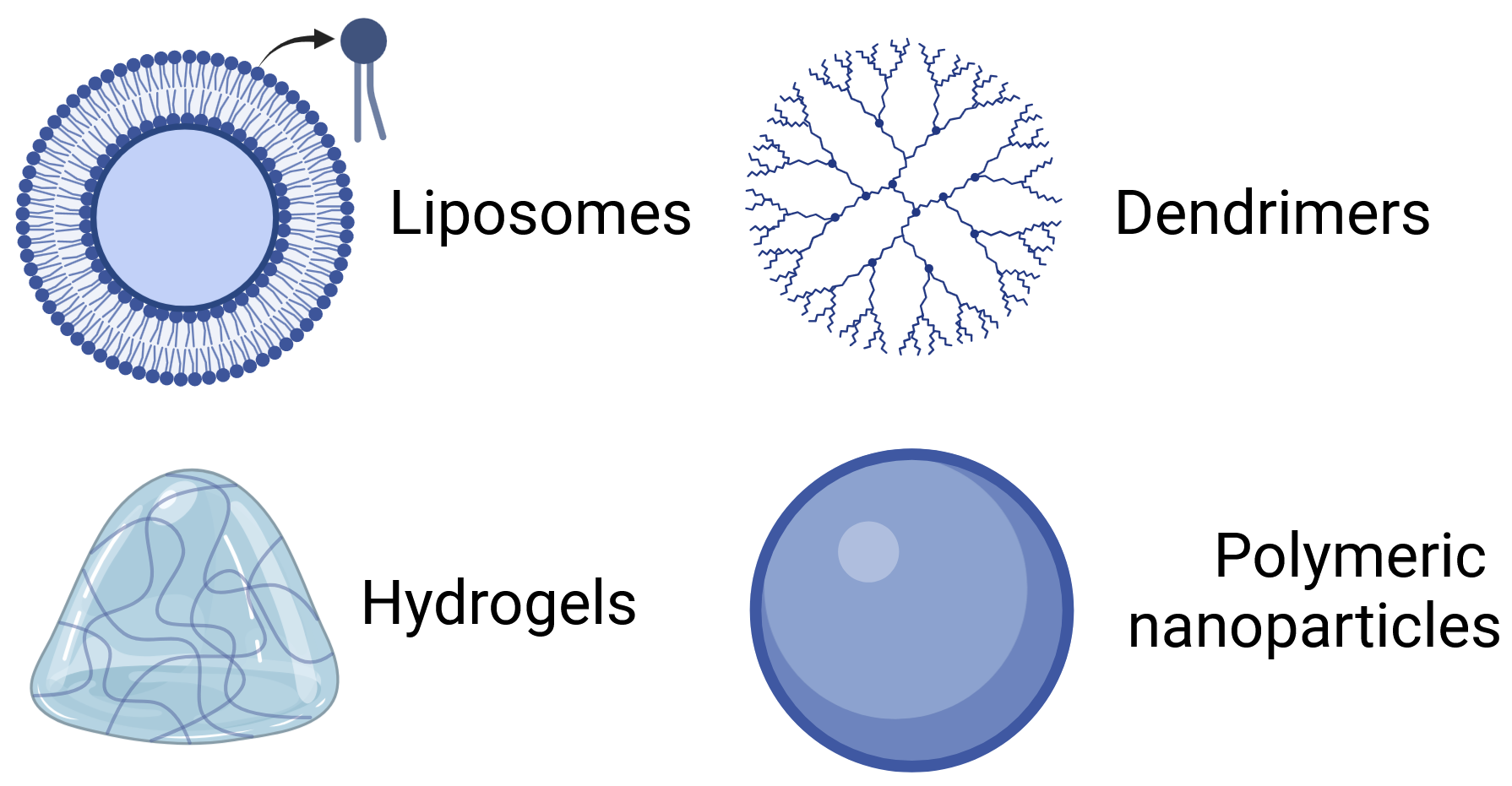
Organic-inorganic (hybrid)